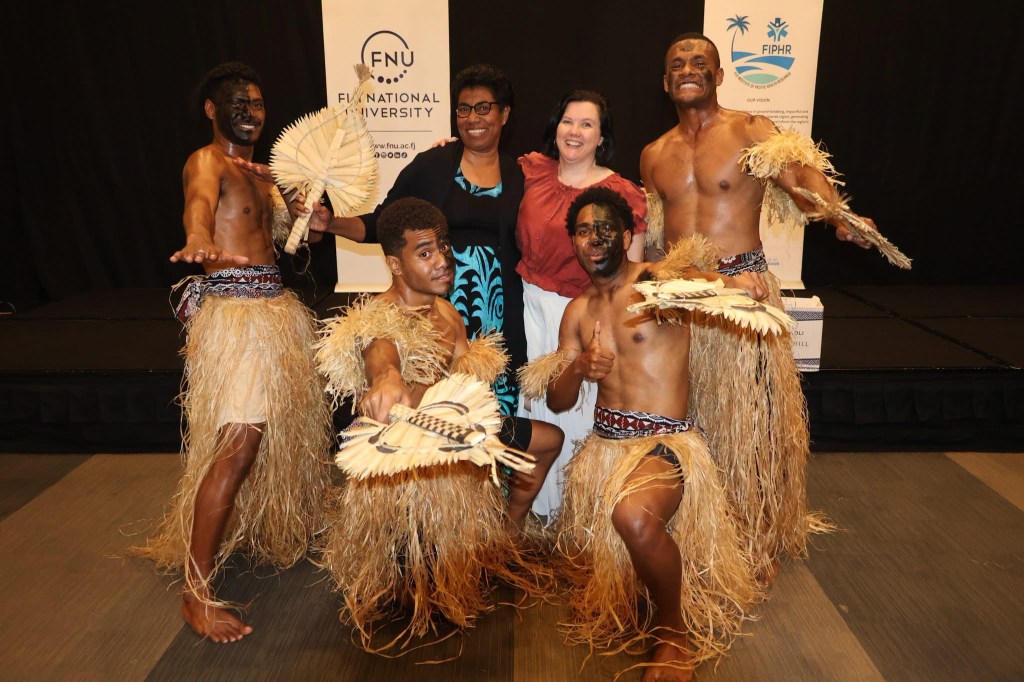
For the third year in a row, the team attended the Pacific Islands Health Research Symposium at Fiji National University. In 2024 we had a poster for our proposed research, in 2025 we the team did two presentations. This year we did five presentations, with all team members presenting except Johanna (who sadly couldn’t be there with us in person).
The Pacific Islands Health Research Symposium (PIHRS), hosted annually by the College of Medicine, Nursing and Health Sciences at Fiji National University, has become one of the Pacific’s leading forums for sharing research that addresses the region’s most pressing health challenges. The 2026 theme,“Accelerating SDG 3 in the Pacific: Research, Accountability and Impact toward Vision 2050”, highlights the growing role of research in supporting health system transformation, policy development, and community wellbeing throughout the region.
Our team presented a series of interconnected studies exploring health system resilience, workforce development, pandemic experiences, and responses to Fiji’s evolving HIV epidemic. Although each study focused on the individual case studies in this project and different aspects of health systems and public health, together they highlighted the importance of relationships, culture, trust, leadership, and lived experience in shaping health outcomes and strengthening system resilience
On the first day both Avendra and Patrick presented thier thesis research. Avendra’s presentation explored how public health graduates could be more effectively integrated into the health workforce and contribute leadership, prevention-focused expertise, and stronger links between policy, practice, and communities. By addressing workforce development through both health systems resilience theory and Indigenous Pacific perspectives, Avendra highlighted opportunities to strengthen preparedness and public health capacity across Fiji and other Small Island Developing States.
The cultural dimensions of HIV response were explored in Patrick’s presentation, building on discussions at the Pacific HIV symposium around the role of traditional leadership in addressing HIV stigma within iTaukei communities. Patrick noted that his research participants expressed strong support for a more active role for the Great Council of Chiefs in HIV education, awareness raising, and stigma reduction initiatives and the potential for traditional leaders to become powerful advocates for culturally responsive HIV prevention and care.
Sharon’s presentation introduced our Health System Magimagi to a Pacific audience. Developed from research examining Fiji’s COVID-19 response, the model drew on the traditional practice of weaving magimagi (coconut fibre rope) to illustrate how resilience emerges through the connections between people, resources, processes, trust, culture, and communication.
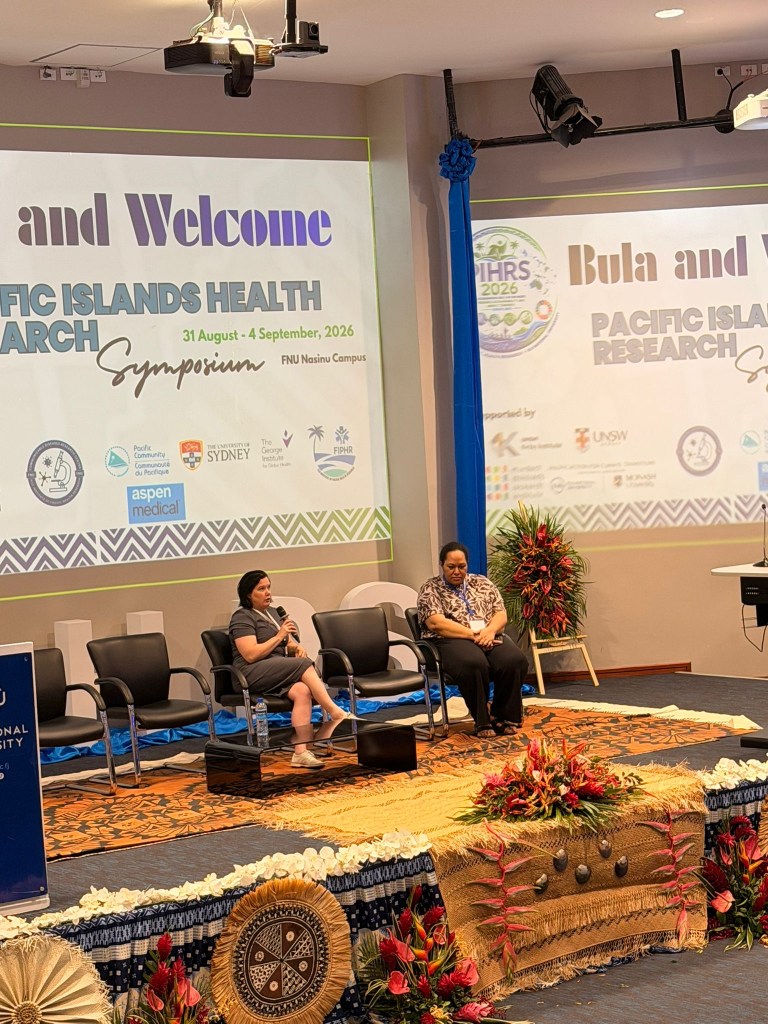
Building on this work, Sharon also presented a rapid review of Fiji’s HIV response. Using the Health System Magimagi framework to analyse more than 100 reports, policies, publications, and media sources, the review identified significant investments in HIV testing, treatment services, surveillance, and partnership approaches as well as persistent challenges, including stigma, confidentiality concerns, variable trust in healthcare services, and limited engagement of cultural leadership structures. The presentation argued that strengthening Fiji’s HIV response requires greater attention to trust, cultural engagement, and community ownership alongside continued investment in clinical services and public health infrastructure.
On the final day Akisi presented an important but unexpected finding from our research. During data collection we found that many participants became emotional while recounting their experiences. Akisi’s presentation reflected on the way in which the interview process itself often became therapeutic, providing participants with a culturally relevant opportunity to reflect on difficult experiences, express previously suppressed emotions, and find meaning in what they had endured.
Collectively, we hope these presentations demonstrated our shared commitment to advancing research that is both academically rigorous and grounded in Pacific realities. From Indigenous models of resilience and workforce development to HIV response and pandemic recovery, our work to date reinforces the importance of culture, relationships, and community engagement in addressing complex health challenges. We are grateful to the organisers of PIHRS for creating the space to share our research and to hear from others working in Pacific health.

