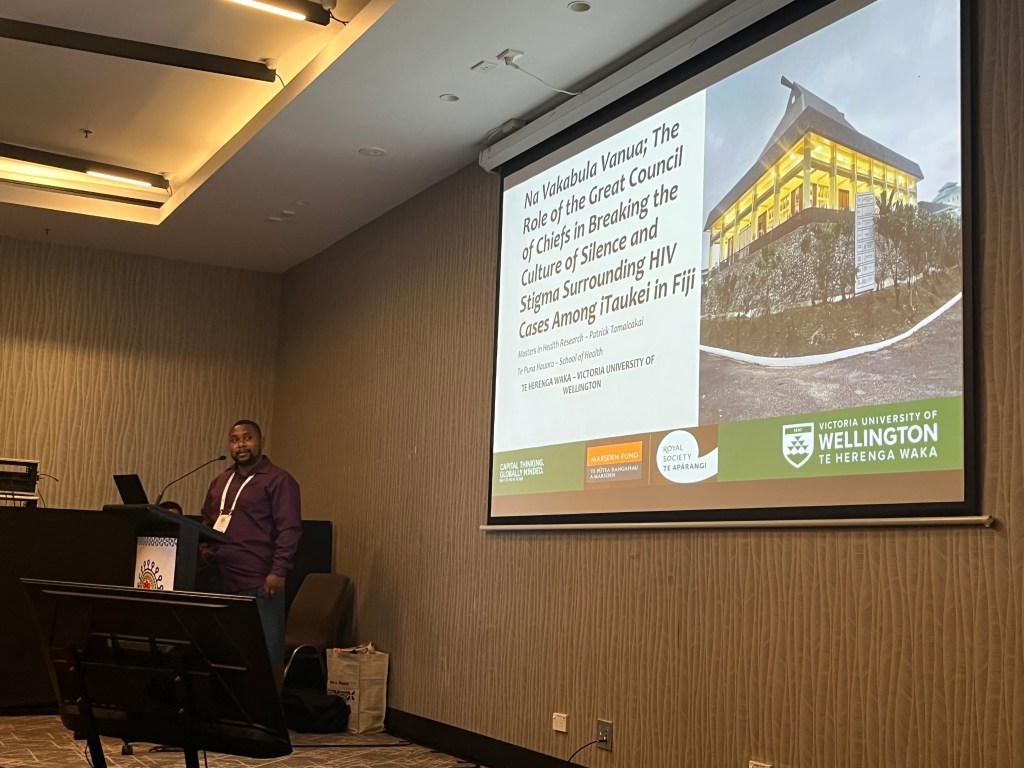
This week our Master of Health Research student Patrick Tamaicakai represented the team and Te Herenga Waka, Victoria University of Wellington, at the Pacific HIV Symposium in Nadi, Fiji. where he gave an oral presentation on his Master’s research on the role of traditional leadership in addressing HIV stigma and improving community engagement in HIV prevention efforts.
Patrick’s presentation, The Role of the Great Council of Chiefs in Breaking the Culture of Silence and Stigma Surrounding HIV Cases Among iTaukei in Fiji, explored how traditional governance structures can support more effective and culturally grounded HIV responses. Drawing on qualitative research conducted using the Fijian Vanua Research Framework and Tali Magimagi Framework, the study examined perspectives from chiefs, their representatives, and key stakeholders on the barriers and opportunities for HIV prevention within iTaukei communities.
The research highlighted the complex cultural dynamics that contribute to silence and stigma surrounding HIV, while also identifying significant opportunities for traditional leaders to become champions for awareness, testing, and prevention. Participants emphasised the importance of strengthening engagement between health services and the Great Council of Chiefs, alongside culturally appropriate health education and leadership development.
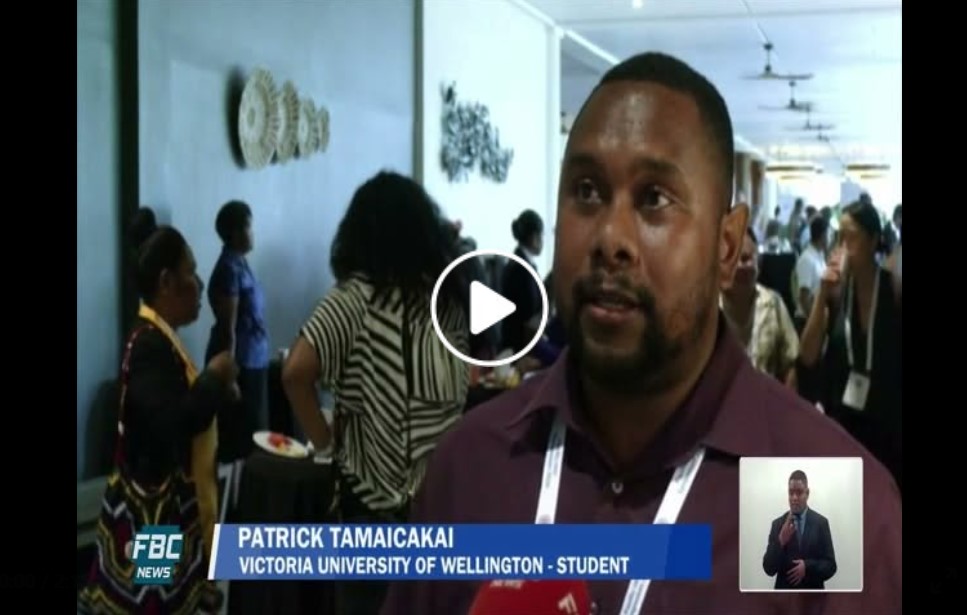
Patrick’s presentation was very well received by symposium delegates, and generated considerable discussion. The presentation also attracted media attention. Following his symposium session, Patrick was interviewed by FBC News, and reinforced the message that HIV in Fiji should be viewed not only as a health issue, but also as a leadership and structural challenge. He discussed the important influence chiefs hold within communities and argued that traditional leaders can play a critical role in encouraging open conversations about HIV and supporting community members to access testing and care.
Patrick’s participation in the Pacific HIV Symposium demonstrates the impact of student-led research and the value of culturally informed approaches to addressing complex public health challenges across the Pacific.

