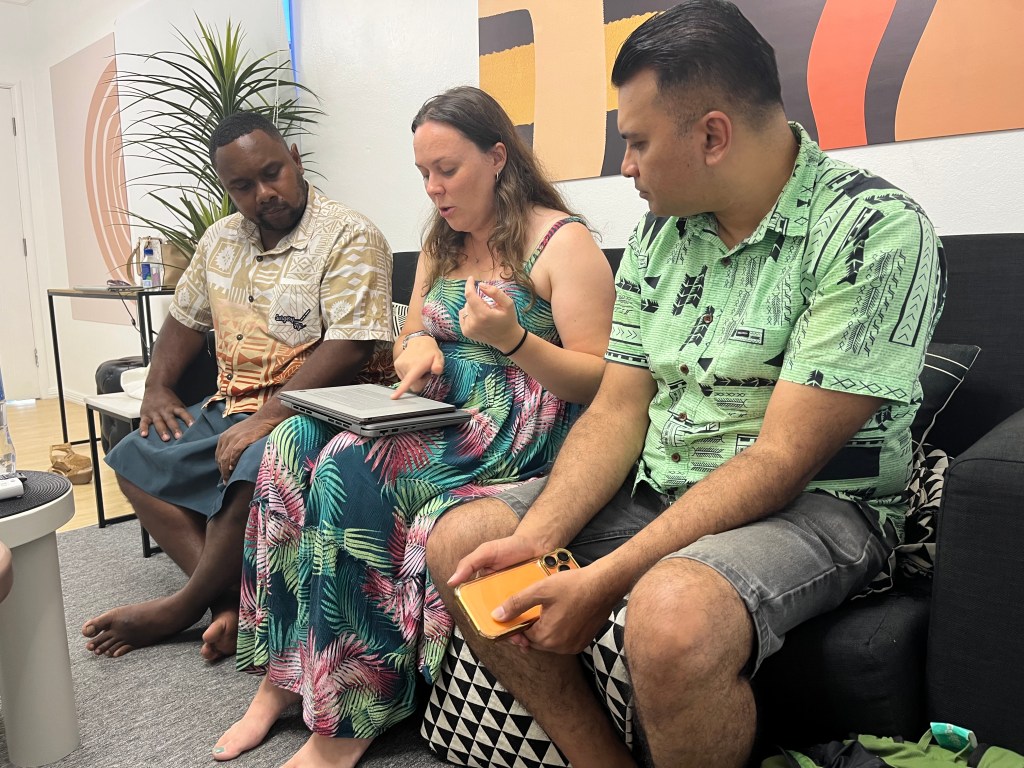
In March and April this year, our team returned to Fiji to continue our ongoing programme of research, and were reminded that research in the real world rarely goes exactly to plan.
Cyclone Vaianu disrupted travel schedules, the team navigated illness and injury, flight delays and technical hiccups. Some planned Talanoa sessions had to be postponed, requiring constant adjustment and flexibility. While challenging, these experiences also mirrored many of the themes emerging in our research — adaptability, resilience, and the importance of relationships.
Back in the Field
Our Fiji fieldwork began in March as Avendra and Patrick started data collection for their thesis research. Over the past few months Avendra has completed a successful survey of public health graduates in Fiji, and interviewed many of these alongside key stakeholders. Pat has completed talanoa with chiefs and stakeholders for his research on silence and stigma surrounding HIV in Fiji.
Sharon and Johanna joined the team in April to support the student fieldwork and continue data collection. A key focus of this trip was returning to communities for data validation Talanoa — an important part of our process, where participants reflect on and respond to our initial findings. These conversations are not just about checking accuracy; they are about ensuring that the research genuinely reflects people’s experiences and perspectives.
What We Heard
Across the Talanoa sessions, there was a strong sense of recognition in the findings. Participants consistently described a system that entered the pandemic with low preparedness but responded with remarkable adaptability.
At the same time, many challenges were revisited:
- Workforce strain was front of mind, with ongoing concerns about staffing shortages and burnout
- Infrastructure and resources were stretched, with creative solutions like repurposed spaces, but limited long-term sustainability
- Leadership mattered — in many forms, from formal health system leadership to community and traditional leadership
- Relationships and trust were repeatedly emphasised as central to how people coped during the pandemic
In both Labasa and Suva, discussions highlighted that resilience is not only about physical resources or systems, but also about less visible elements — such as cultural connections, trust, and community bonds.
There was also a strong call to strengthen the future through better training, clearer systems, and a renewed focus on primary and community health approaches.
Listening at Community Level
Alongside the validation Talanoa, the team also spent time in a settlement near Suva, carrying out interviews for the community case study. These conversations provided deeper insight into how people experienced the pandemic in their day-to-day lives.
What stood out was the importance of informal support systems, including families, neighbors, and community leaders, and the role they played in navigating uncertainty and maintaining wellbeing. These perspectives continue to shape how we think about resilience beyond the formal health system.
Looking Ahead
Despite the disruptions, this trip was an important step in grounding our findings in the lived experiences of those who shared their stories with us. Returning to Talanoa reinforced both the strengths and the challenges within Fiji’s health system, and highlighted the importance of listening, reflecting, and working collaboratively.

