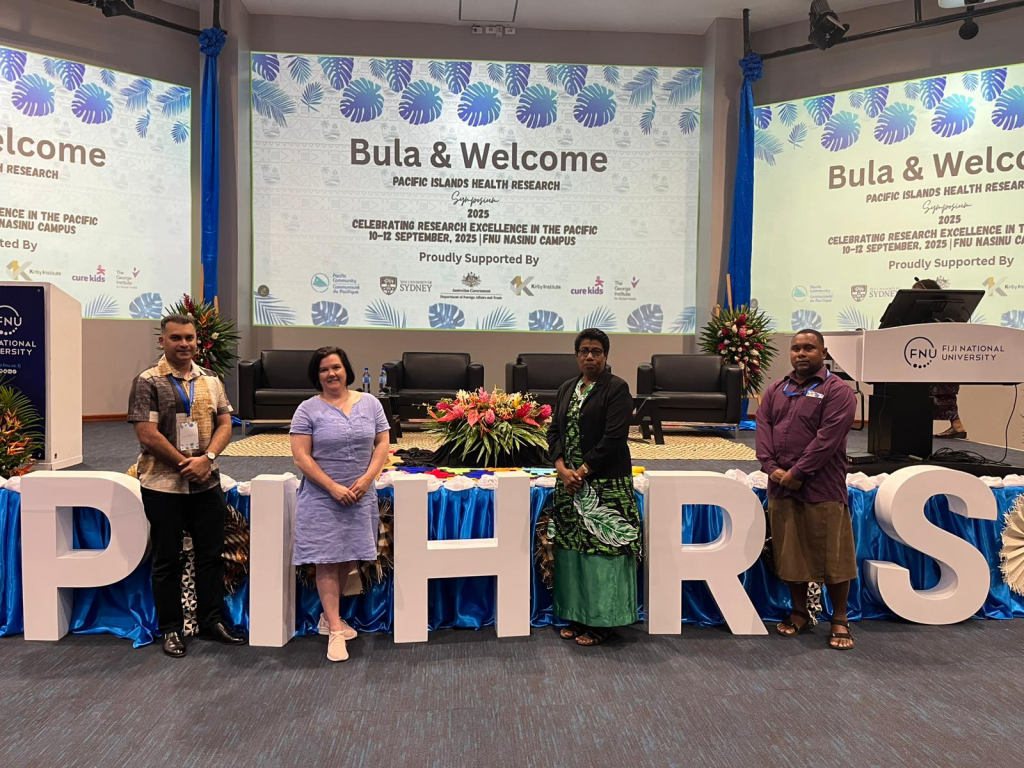
Last week Sharon, Akisi, Avendra and Patrick joined researchers, health workers, and students from across the region at the Pacific Islands Health Research Symposium (PIHRS) 2025, hosted at Fiji National University’s Nasinu campus. The symposium, held alongside the 140th anniversary of the Fiji School of Medicine, was a chance to celebrate Pacific research excellence and to share ideas about how we can build healthier futures for our communities.
Across three packed days, we heard from inspiring keynote speakers and joined discussions on some of the most important issues facing the Pacific: non-communicable diseases, antimicrobial resistance, sexual and reproductive health, planetary health, and mental health. A strong theme throughout was the importance of Pacific-led research – research that reflects Pacific values, cultures, and lived experiences.
Our team was privileged to be able to contribute to these conversations. Akisipresented her research on iTaukei community experiences during COVID-19. Drawing on research talanoa with village communities, she explored how people navigated the uncertainties of the pandemic – balancing fear, faith, and cultural traditions. Her presentation highlighted how communities want the Ministry of Health to engage more clearly and inclusively if we face another pandemic. It was a powerful reminder that effective health responses must listen to, and be shaped by, local voices.
Sharonshared findings from Talanoa with Fijian frontline health workers, “Difficult deaths, unfinished mourning”, building on Johanna’s DSA presentation. She spoke about the emotional toll of caring for patients during COVID-19, often in situations where families could not be present to say goodbye and where health workers faced separation from their own families. These narratives reveal the costs of resilience: the emotional burdens carried by frontline workers, the trauma of witnessing death without dignity, and the fragility of poorly resourced systems stretched to their limits. The presentation underscored the need for responses that protect not only physical health but also emotional and cultural wellbeing – especially for those on the frontline.
Both talks sparked thoughtful discussions and connected with the wider themes of PIHRS: that Pacific health research is at its most powerful when rooted in Pacific contexts and connected to the communities it serves. And that Pacific health cannot be understood through biomedical perspectives alone. Culture, relationships, spirituality, and collective resilience are integral to both community and workforce wellbeing.
 Exploring Fijian Health System Resilience