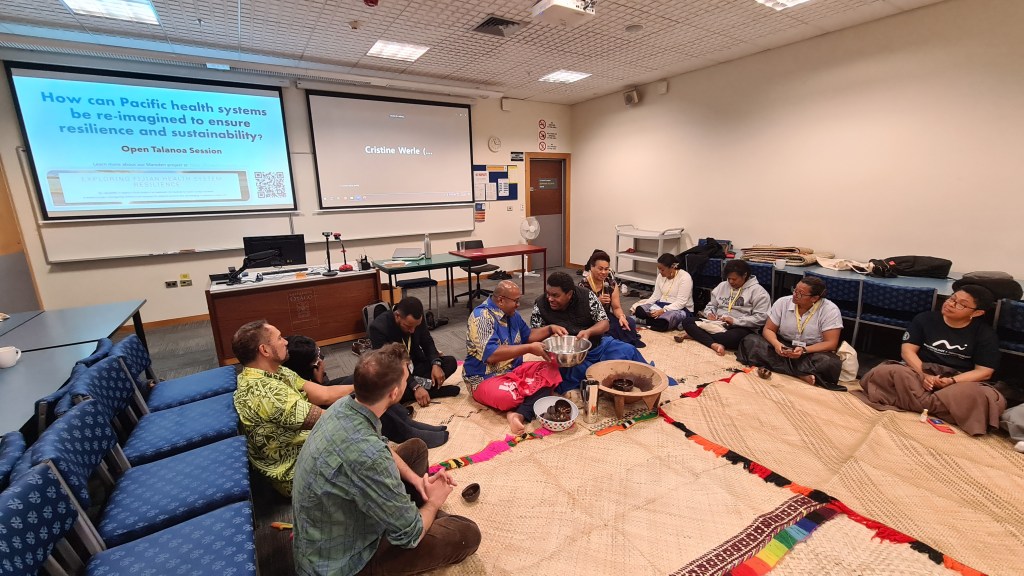
As part of the DevNet 2024 conference, held in Ōtepoti (Dunedin), the team hosted a talanoa session centred on the question: How can Pacific health systems be re-imagined to ensure resilience and sustainability? This discussion brought together a diverse group of Pacific researchers, healthcare professionals, and academics.
The event opened with a traditional Fijian sevusevu ceremony, symbolising entry and acceptance into a communal space. This was followed by an open discussion where participants shared insights, challenges, and ideas.
Key speakers included Professor Patrick Vakaoti (University of Otago – Otago Global Health Institute), Dr Esala Vakamacawai (University of Canterbury), Dr Iris Wainiqolo (Fred Hollows Foundation), Dr Bradley Yombon-Copio (Commonwealth Students’ Association Pacific Regional Representative), and Dr Suliasi Vunibola-Davelevu (University of Canterbury).

Cultural Practices and Local Contexts
One of the session’s key themes was the importance of grounding health systems in Pacific cultural practices and cosmologies. Health, as understood in Pacific contexts, is holistic, encompassing physical, spiritual, and communal well-being.
Professor Patrick Vakaoti critiqued the dominance of Western frameworks, advocating for Indigenous concepts such as bula (health, life, and welcome) to guide reforms. He reminded participants that “health is everyone’s responsibility”, and emphasised the need for cultural relevance in healthcare interventions. Similarly, traditional systems were identified as crucial for improving health system resilience and sustainability in Pacific contexts. For example, Dr Esala Vakamacawai described how the physical activity of daily life in more remote parts of Fiji, such as uprooting cassava, cutting firewood, and walking to their farms, were practical ways of contributing to lower rates of non-communicable diseases (NCDs).
Challenges in Pacific Health Systems
Structural and systemic challenges were central to the discussion. Speakers highlighted a chronic shortage of healthcare professionals in rural and remote areas, driven by migration and resource limitations. Dr Bradley Yombon-Copio illustrated this through his experiences during the COVID-19 pandemic in Papua New Guinea, where final-year medical students were deployed due to severe staffing shortages.
The misallocation of resources was another recurring issue. Dr Esala shared an example from Fiji, where hospitals acquired MRI machines without trained operators or sufficient basic supplies like antibiotics. “We’re trying to move too fast,” he observed, “and we’re losing touch with what the practical things are on the ground.”
Cultural barriers to accessing healthcare were also noted, with participants highlighting how traditional beliefs often delayed treatment or conflicted with modern medical advice. In most cases, however, traditional beliefs were seen as a source of strength, providing an opportunity to work in conjunction with health systems.
Success Stories and Innovations
A number of examples of innovation and collaboration emerged from the discussion. Dr Esala highlighted a Christchurch community gardening project as a holistic approach to addressing NCDs through nutrition, physical activity, and social connection. Dr Iris Wainiqolo described a successful regional partnership among Pacific-trained ophthalmologists. These professionals collaborate across borders to address workforce shortages, reflecting what she called a “locum system within the Pacific”. Both examples underscored the importance of leveraging local knowledge, community action, and camaraderie to create sustainable health solutions.

Proposed Strategies for Resilience
Participants agreed that prioritising primary healthcare is crucial for building resilience. Dr Iris advocated for a return to primary healthcare in Fiji, noting, “We are countries with struggling economies, and I think we need to push back to primary healthcare.”
Another key recommendation was fostering interdisciplinary collaboration and addressing the “in-between spaces” of health systems – interactions and dynamics that connect infrastructure, human resources, and other components. Pacific cultural concepts such as solesolevaki (communal sharing) were also seen as offering valuable insights for fostering collaboration and resilience.
Looking Ahead
The session served as an important milestone in our ongoing research on health system resilience in Fiji. Further talanoa sessions are planned in Fiji to deepen these conversations and expand stakeholder engagement.
This discussion also reaffirmed that health is not just a sectoral issue but a deeply interconnected cultural, social, and environmental matter. It revealed a wealth of local knowledge, innovation, and community strength. As Dr Iris put it: “Health is everybody’s business.”

 Exploring Fijian Health System Resilience